
Henry County Multi-Day Arrest Reports
Henry County publishes no 72-hour, seven-day, or weekly arrest log. The sheriff's office keeps no online blotter. County departments do offer public-record routes. But none carries a booking archive with photos or a weekend schedule. Paris Police releases individual incident reports instead. Those are event-driven. They cannot stand in for a complete city or county booking list. A multi-day arrest search in Henry County therefore pulls from several places, each with its own role. Police releases explain selected enforcement events. Henry County Corrections confirms who was booked into local custody. County-held booking logs and records flow through the Public Records Request Coordinator. Court files show what happened at later hearings. News coverage adds context. But editors pick which arrests get a story, so the selection is never complete.
No Henry County weekend surge or posting delay can be measured from public sources. A quiet news weekend never means no arrests happened.
Read the Henry County Blotter
Pick a date range first. Name the agency too. A loose search for "recent arrests" drags in old private listings, unrelated counties, and stray news hits, which is why the incident-report, booking, and court distinctions matter.
- Choose the start and end dates for the period being checked.
- Review the official Paris Police incident page when a Paris event is involved.
- Search countywide local news for selected sheriff, task-force, or police releases.
- Call Henry County Corrections at (731) 641-0250 to confirm local booking or release.
- Request the relevant booking log, arrest report, or photograph from its custodian.
- Check the named court and clerk for amendments and disposition.
Need a same-day answer? Use the Arrests Last 24 Hours path. The blotter method reaches wider, catching delayed agency releases, selected weekend stories, and records that no longer sit in a current-custody system.
What an Arrest-Log Request Shows
Henry County offers no public arrest-log interface to browse. So ask for fields, not a page. Worth requesting: arrest time, booking time, charge, bond, and booking photo. No single document is guaranteed to hold them all, and identifiers, juvenile material, victim data, medical details, and active investigative information may be redacted.
| Field | Use |
|---|---|
| Name | Identifies the person recorded at intake |
| Arrest date and time | Places the enforcement event in the chosen window |
| Booking date and number | Identifies the separate jail transaction |
| Arresting agency | Points to the incident-report custodian |
| Charges as booked | Records charges at intake, not a conviction |
| Bond and court | Shows conditions and next forum when available |
| Status or release date | Separates current custody from a past booking |
| Booking photograph | Must be requested separately when not published |
Arrest time and booking time rarely match. The police event belongs to the arresting agency, and the intake record belongs to Corrections. A story's publication time differs from both. Follow the underlying dates rather than assuming the newest article covers the newest booking.
Henry County News Blotter Pattern
Four outlets anchor local crime coverage in the area. They are Henry County Now, Radio NWTN, the Paris Post-Intelligencer, and the McKenzie Banner. Their stories lean toward drug investigations, traffic stops, standoffs, and task-force work. Those are the events that draw a release. Radio NWTN has run a story with a mugshot credited to the Sheriff's Office. The McKenzie Banner has printed HCSO photos too. Neither proves a public sheriff gallery exists. The Radio NWTN example shows this contextual style of reporting.
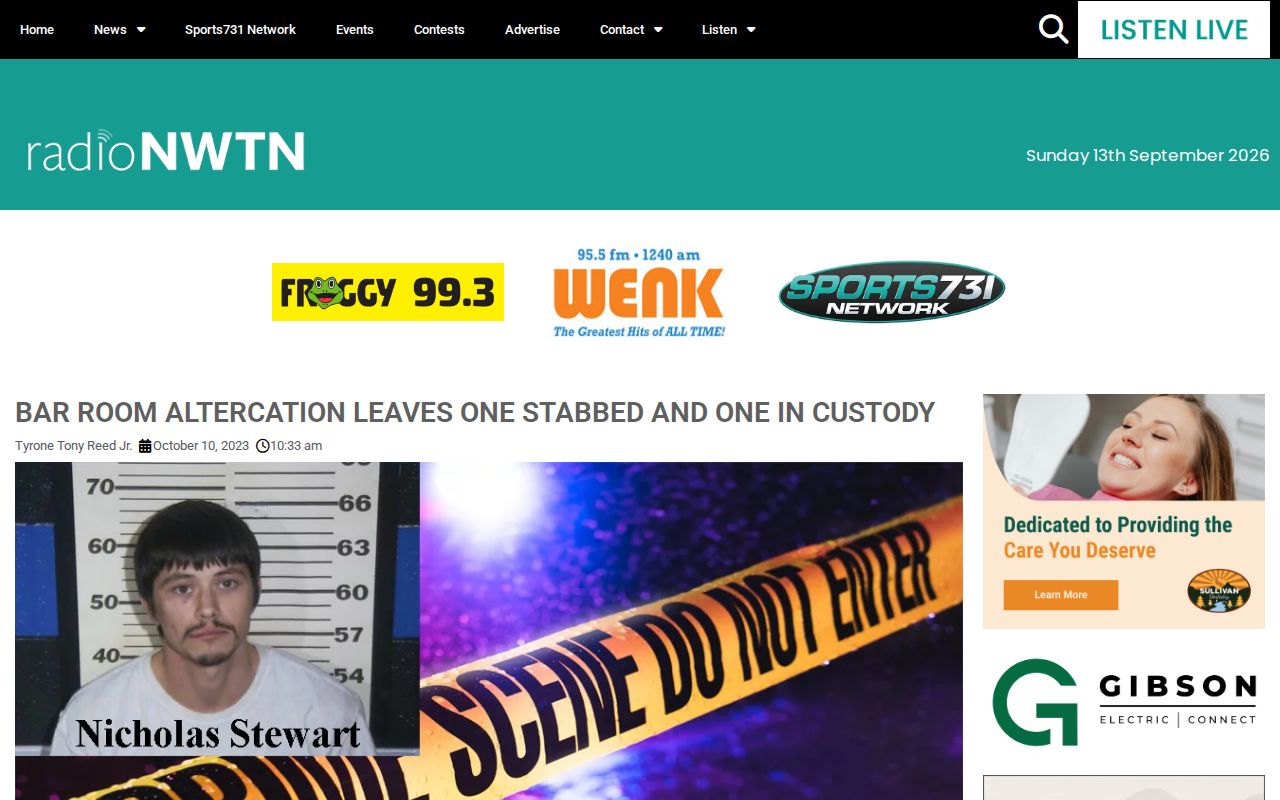
The Radio NWTN story documents one selected event. It is not a jail log. News reports preserve a public trail even after a current roster changes. They also stay online after charges change. Treat names, bond figures, and custody statements in them as dated assertions, and confirm the court outcome before concluding anything.
Regional Police and Court Records
The McKenzie Banner runs standing police-records and court-records sections for a regional readership. Its coverage spans communities near Carroll, Henry, and Weakley counties. Paris and Henry County events do appear there. But McKenzie sits outside the county's three city pages. The paper is not the Henry County jail custodian. Treat its regional police-records section as a secondary lead.
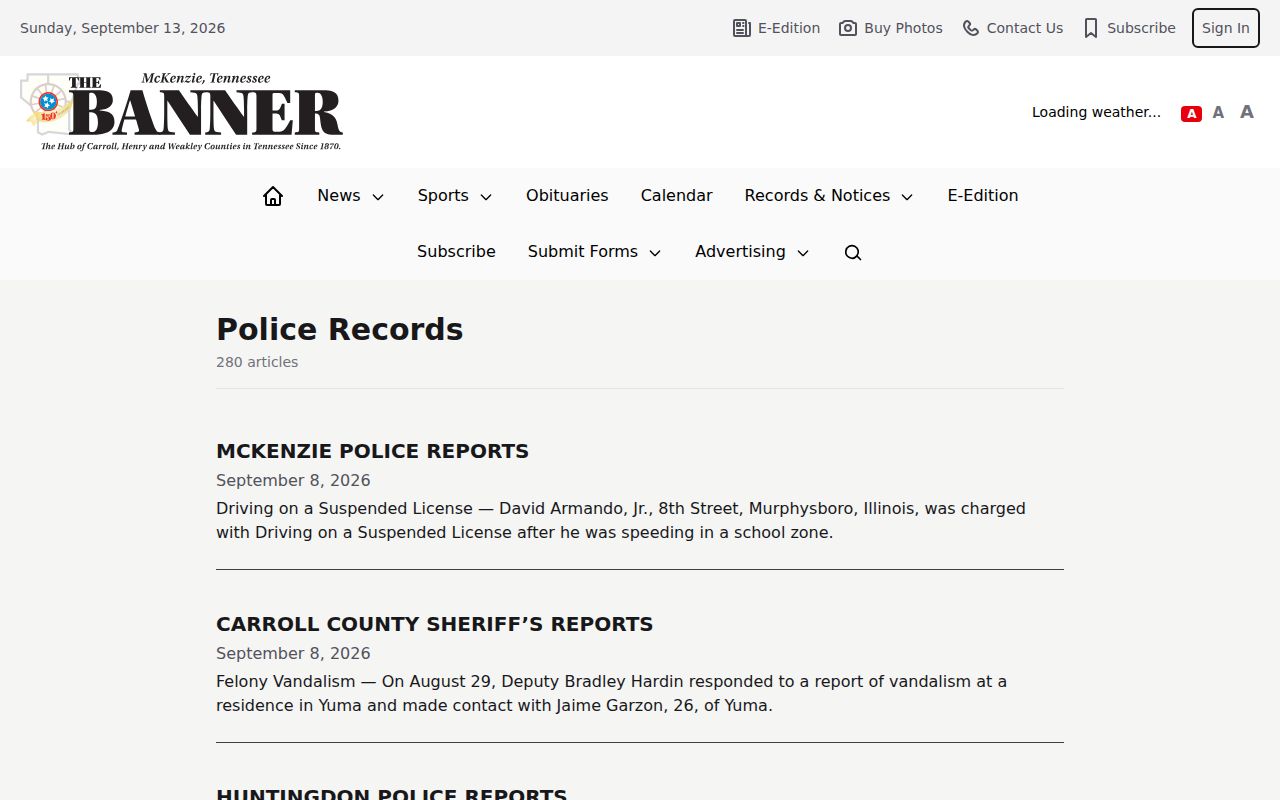
Let a story name the dates and agencies. Then get the official record. The Banner's court material is secondary too. Certified dispositions come from the clerk, listed in the county directory for Circuit and General Sessions at (731) 642-0461. Paris municipal cases may run through Paris Municipal Court rather than the county criminal docket.
Weekend Arrests Without a Feed
Henry County posts no feed proving a Monday batch or a holiday pause. The safer read is narrower. A booking may enter the system quietly. Public word comes later. A VINE status, an agency response, or a news article can lag behind, shaped by workload and editorial choice. Ask the custodian by dates. Weekend requests should cover both arrest and booking times, not publication day. A late-night arrest can cross midnight before intake, and released people may drop out of any current-custody response. A released person can still have a booking record. That record and its court case outlast any custody list. Note: A gap in weekend articles is a gap in news coverage, not a verified gap in Henry County arrests.
Request an Older Booking Log
Henry County gives arrest-record seekers a clear official path. The county request policy explains the process, supplies a form, and lists publicrecords@henrycountytn.gov. Address your request to the Sheriff's Office or the Corrections Facility. Give an exact span of dates. Then say precisely what you want. Options include a booking log, an inmate register, an arrest report, a booking photograph, or release information. Those are separate record series, and each may sit with a different custodian.
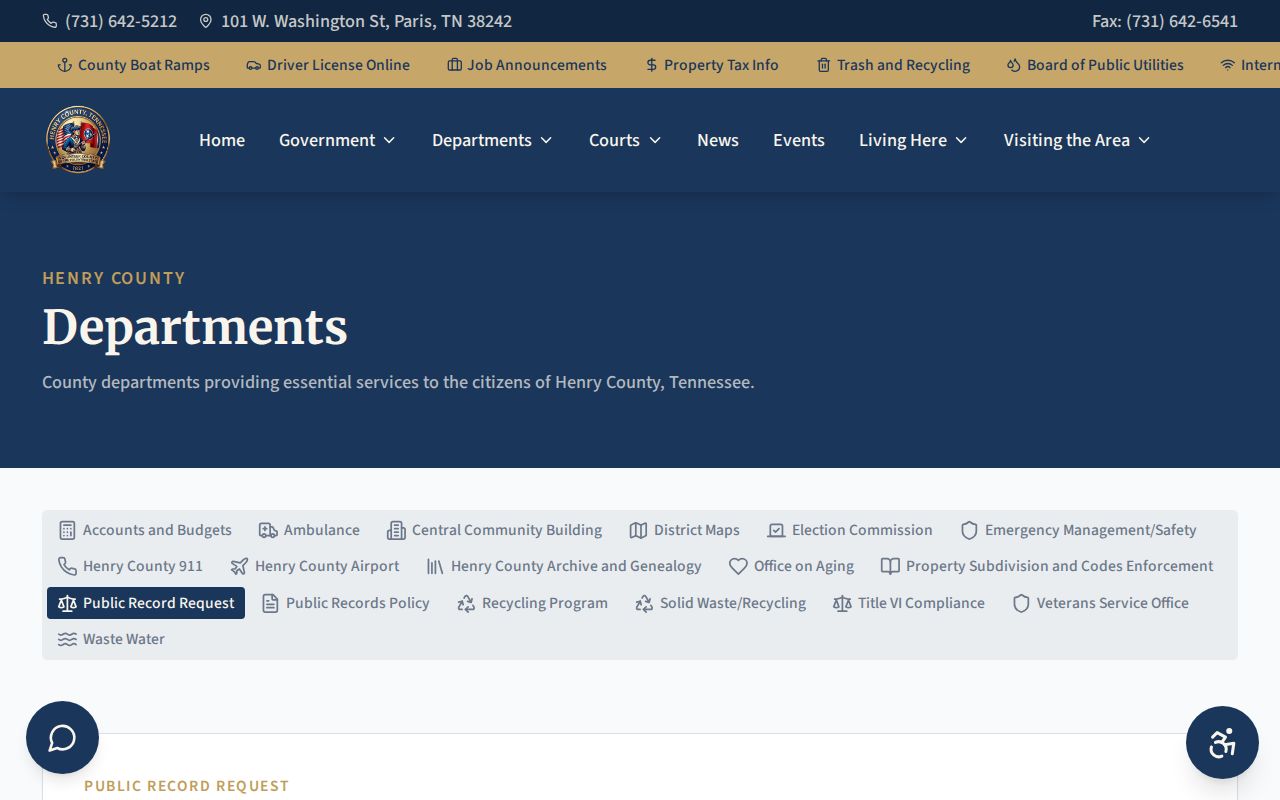
Know what the process does and does not promise. Henry County lets you inspect records and buy copies. It does not guarantee that every field you ask for is public. State guidance requires the custodian to act promptly or, within seven business days, to grant access, deny it with a legal reason, or send a time and cost estimate. That deadline is not a completion date. Ask for the county's current estimate before paying for copies.
Henry County Arrest Archives
Older Henry County arrest material lives under different retention rules. The CTAS sheriff retention schedule splits these record types apart. Identification files, which include photographs and fingerprints, carry a life-of-subject or 100-year presumption. Inmate census records, often covering booking logs, carry a five-year entry. Inmate and prisoner registers are permanent. CTAS cautions that counties vary. A schedule category never proves an office actually kept records in that form.
Retention periods say nothing about online access. A booking photo can be kept internally. It may never be posted publicly. A five-year booking-log rule does not touch a separate permanent register. Before relying on any of this, ask Henry County which series it adopted. Also ask whether an expungement order, litigation hold, lawful destruction, or exemption affects your request.
Genuinely historical court minutes may lead to the Tennessee State Library and Archives. They may also lead to the Henry County Archives. Neither is a present-day jail-photo repository. Start with the Sheriff, Corrections, or the clerk before escalating.
Unofficial Henry Arrest Pages
Private arrest sites deserve caution. Busted Newspaper's Henry County page carries entries dated 2022. It works as a stale historical lead rather than a current blotter. Mugshots.com holds older listings from roughly 2012 through 2015. RecentlyBooked's Henry route returns a 410 error. Arrests.org offers no usable Tennessee Henry County section. Mugshots.zone does not establish one either. The older private Henry County page shows exactly how dated these listings get.
Put official sources first. A private page may copy a photo or charge a fee. It may say nothing about release, amendments, dismissal, expungement, or final disposition. This resource hosts no gallery and does not reproduce booking photos.
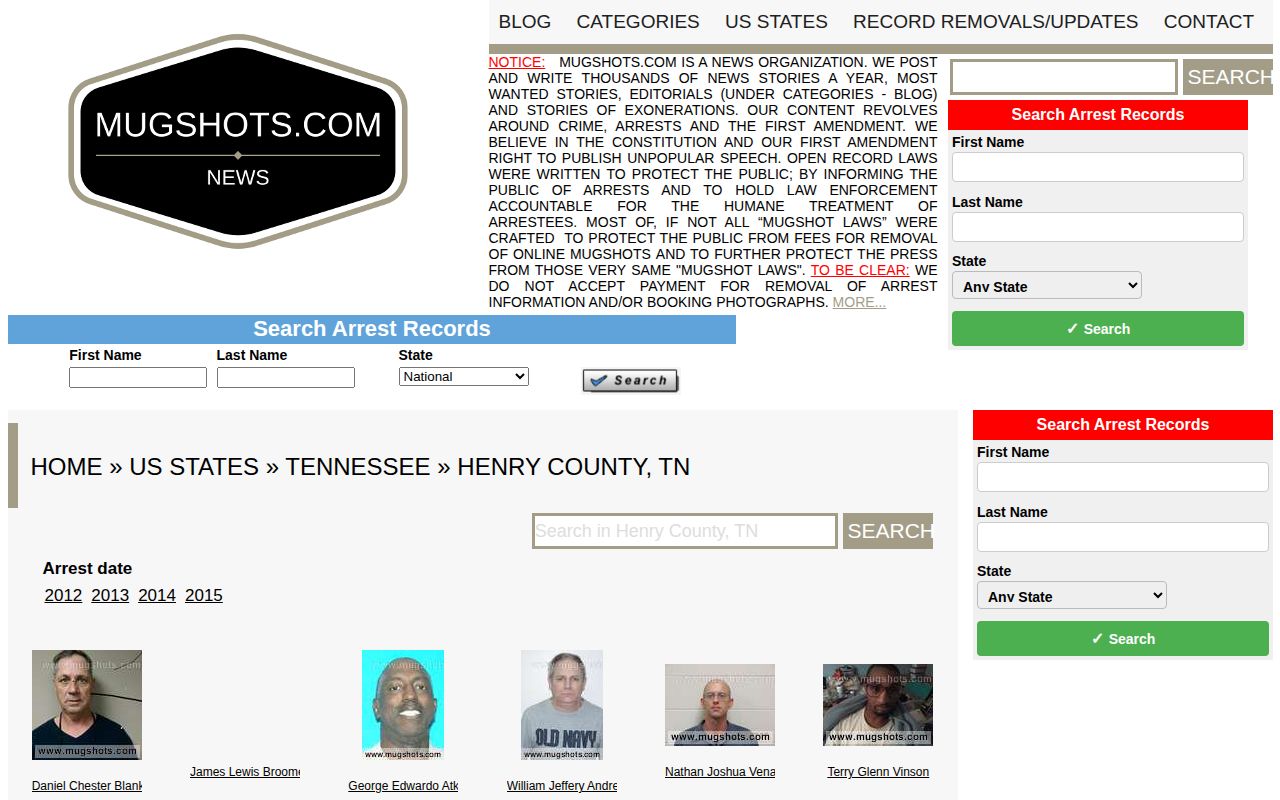
The image is contextual evidence about the third-party landscape, not an endorsed booking source.
From Arrest Report to Disposition
A blotter captures the start of a case. It never captures the end. The arresting agency writes the incident or arrest report. Corrections records the booking. The clerk then tracks the warrant or capias, the hearings, the filings, and the disposition. A case may be dismissed, continued, transferred, bound over, or resolved by plea. It may also be tried, acquitted, or concluded some other way.
So describe a blotter entry as "charged," "booked," or "accused." Save "convicted" for a court disposition. If a private or news page lingers after a case changes, get the official disposition. Then ask the publisher to fix its dated account. A missing current-custody result does not erase the older record. And an old article never means the person is still in jail.
Public Record Search
Sponsored Results